

Blogs

CTO of Netformx
More about Jacob Ukelson, D.Sc.
AI and Predictive Analytics: Better Together
It’s no surprise that there’s so much excitement around Generative AI (GenAI). Its conversational interface feels almost human, and it excels at tasks like analyzing unstructured data, recognizing patterns, and generating creative content. By applying machine learning to vast amounts of information, GenAI can identify and apply patterns to new situations which is a remarkable leap forward in human-computer interaction.
However, GenAI has its limits. It struggles with structured data, like the kind found in spreadsheets, databases, and business systems. And that’s a problem, because most business analytics and forecasting rely on structured data, not chat-based insights.
The Role of Traditional Analytics
Real business intelligence comes from analyzing and interpreting structured business data. Most organizations rely on three main types of analytics:
- Descriptive analytics – explains what happened.
- Diagnostic analytics – explains why it happened.
- Predictive analytics – uses historical data to forecast what will happen next (e.g., sales trends, customer churn, or renewal likelihood).
All three depend on clean, structured data and proven techniques such as statistical modeling, supervised learning, and data mining.
At Netformx, we’ve spent over 25 years mastering Cisco structured data — including CCW, CCW-R, VIP rebates, Cisco Ready reports, and actual network discoveries. This depth of experience has made us the premier data-driven platform Cisco partners rely on to improve profitability. And now, we’re bringing AI into the equation.
Two Sides of the Brain: Analytics + AI
While AI and data analytics may sound similar, they serve different purposes in business. Analytics begins with structured records (transactions, bookings, or partner performance data) and extracts measurable insights. AI, on the other hand, thrives in the unstructured world of text, images, and natural language.
When combined, they create a powerful synergy which is much like the two hemispheres of the human brain.
- Analytics (the left brain) is logical, data-driven, and factual.
- AI (the right brain) is creative, contextual, and intuitive.
AI can “hallucinate” or make leaps of intuition; analytics deals strictly in verifiable facts. But together, they deliver fact-based forecasts enriched with intelligent context. The result: grounded insights that are both accurate and actionable.
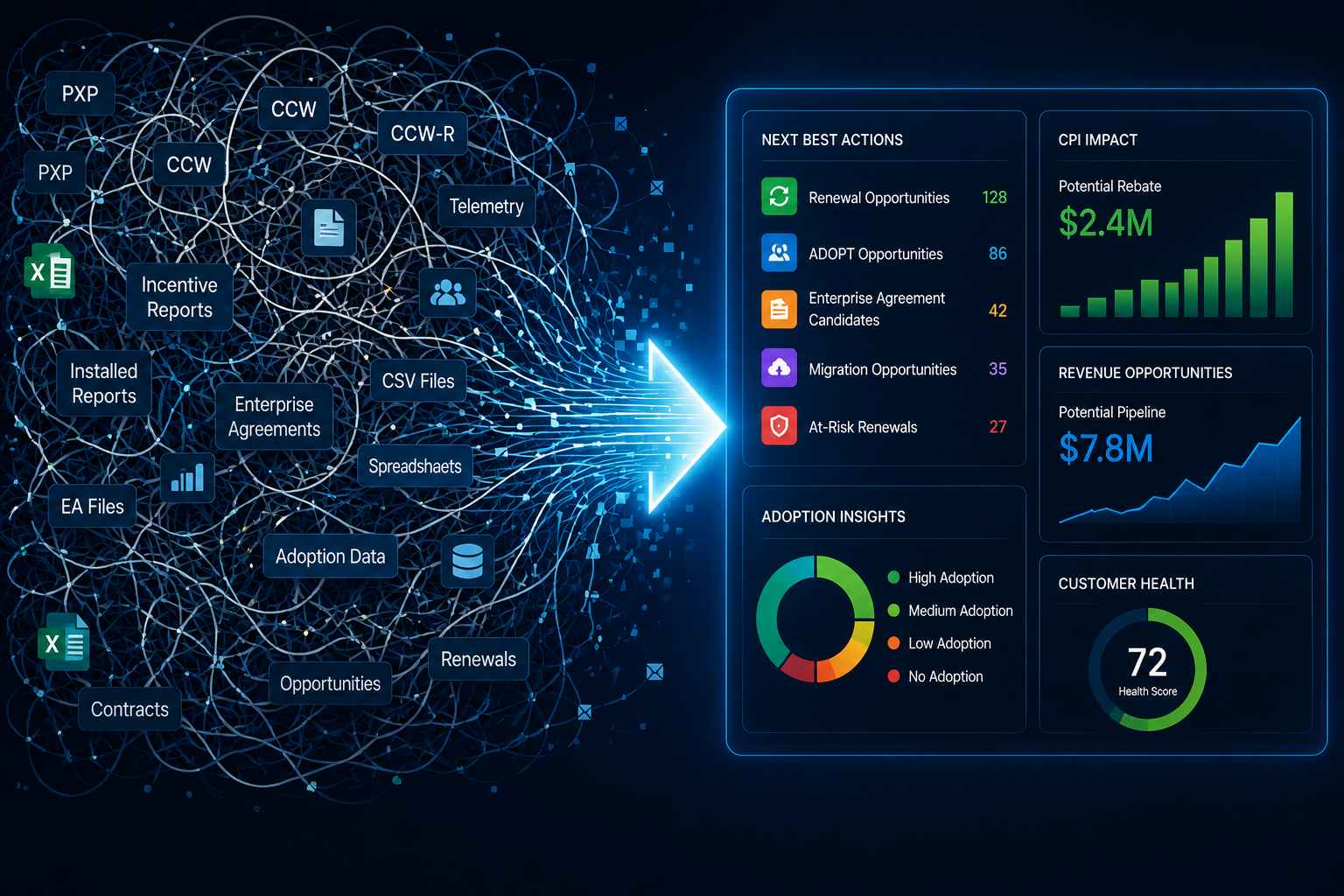
At Netformx, our structured data analytics provides the numerical foundation, while AI adds context, natural language, and scale. This transforms complex data into accessible, business-ready intelligence.
Applying the Synergy to Cisco 360
We’re now applying this powerful combination to Cisco 360 Partner Value Index (PVI) scores and soon, to Cisco Partner Incentive (CPI) rewards once Cisco fully rolls them out.
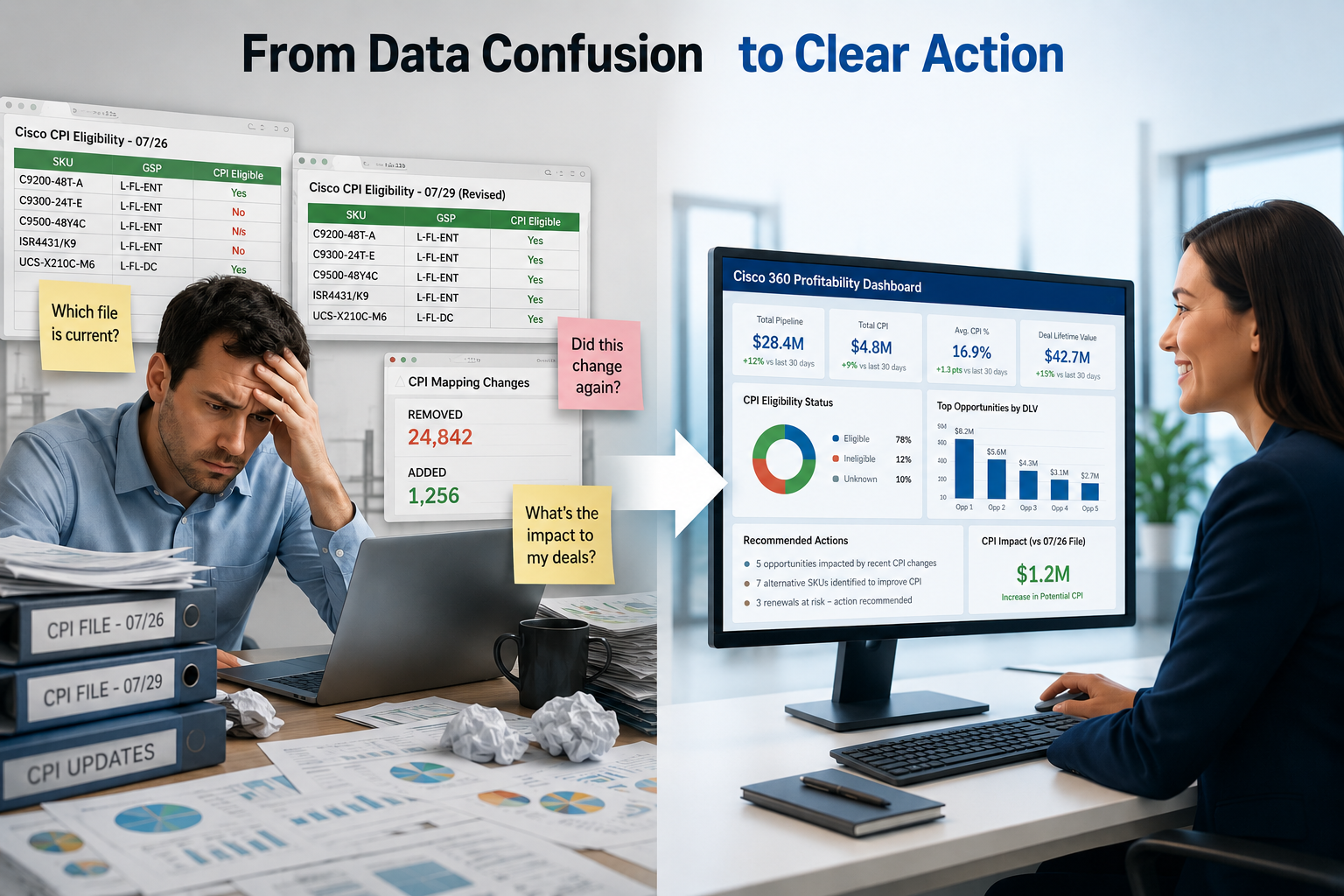
This means you’ll no longer need to start with raw data or assumptions. Instead, you can start today with a business question.
Ask our AI something like: “What can I do right now to improve my PVI score?”
The AI understands the context of PVI and your specific business situation, while our analytics engine applies mathematical models to your historical data to generate an immediate, data-backed forecast. Then AI refines the output with contextual insight, instantly giving you a clear, actionable roadmap.
This is a game-changer for Cisco partners. Cisco 360 will no longer feel like a black box. You’ll finally see how your scores are calculated and what actions will move them higher, turning it into a transparent, data-driven system that helps you optimize performance, plan strategically, and protect profitability.
Ready to See It in Action?
If you want to see how AI and predictive analytics can transform your Cisco 360 results and help you improve your PVI score before the window closes — let’s talk.
Contact sales@netformx.com or request a demo today.
See how the best of both worlds — AI and analytics — can power your next stage of success.


How do I make sense of my Cisco data?